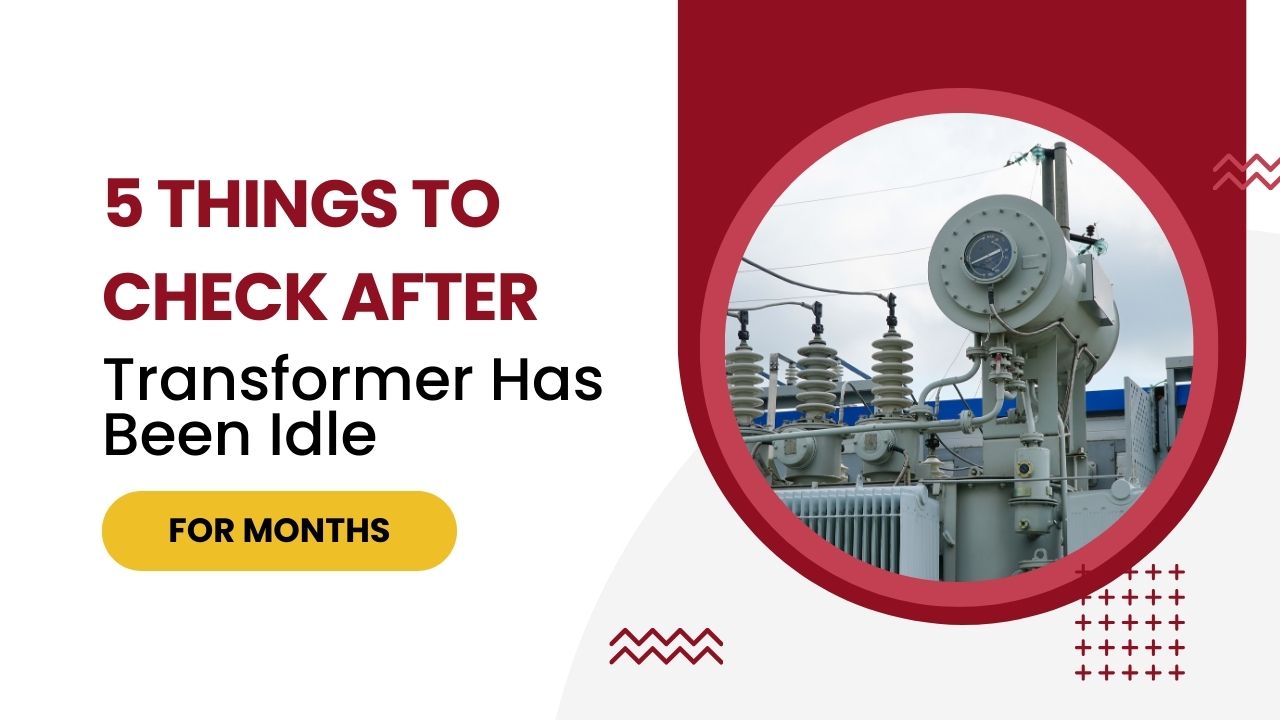
Idle equipment gathers more than just dust. It absorbs moisture, loses calibration, and may shift ever so slightly just from thermal cycles or air movement.
A transformer that’s been sitting disconnected for months won't behave the same as one in regular service.
Powering it up without checks could lead to false trips. Or worse, silent degradation.
Here’s where to start before switching it back on.
After a long pause, oil inside the power transformer may carry more than just insulation duty. It can absorb traces of moisture or air.
Even small changes in ambient pressure can shift how the oil behaves.
Drawing a fresh sample lets you spot early signs of aging, like lowered dielectric strength or gas formation.
What you see in that fluid often mirrors what’s happening inside the tank, long before any visible fault.
Time weakens insulation, especially without heat cycling to keep moisture at bay.
After a long shutdown, winding insulation may attract and trap water molecules, reducing resistance across layers.
Use a megohmmeter to check between windings and from windings to ground.
Comparing those readings to past benchmarks can show how much insulation has drifted over time.
A sharp drop suggests either surface contamination or deep moisture ingress.
Idle status doesn’t freeze a transformer in place. Terminals, bushings, and tap changers all experience micro-movement from ambient temperature swings.
Metal expands and contracts, sometimes just enough to loosen bolted connections.
Look for corrosion at contact points and discoloration at joints.
Even if the lugs look clean, verify torque on major terminals; just one loosened clamp could trigger hotspots when the load returns.
Transformers sitting outdoors become shelters for more than electrons. Birds, insects, and rodents may enter through small gaps or vents.
Some nest materials are conductive, particularly if they mix with moisture.
Before starting, visually inspect the tank and cabinet for organic material. Use a flashlight or borescope to check tight corners near radiators or inside marshalling boxes. It’s a simple check that prevents some of the most preventable faults.
Protection settings age quietly during downtime. Firmware resets or brief outages may disrupt what used to be reliable. Even when the relay configuration stays intact, the original logic may no longer fit the unit’s updated role or load profile.
Before re-energizing, it helps to revisit those settings line by line. Including pickup points, delay curves, and coordination checks.
These numbers only matter if they still reflect your actual risk. A quick functional test adds confidence that everything trips only when it should, and exactly how it should.
Bringing a transformer back after a long break takes more than switching it on. You’re working with a system that’s been sitting still, exposed to moisture shifts, slow leaks, and unseen stress points.
Every check (oil, insulation, terminals, trip logic) builds a fuller picture of readiness.
We see this often with backup units or rentals coming back into rotation. Our reactivation process focuses on these same steps to help clients move fast without skipping essentials.
If you’re restarting a transformer, a careful reset now goes a long way toward steady performance later. Get in touch with us to learn more.