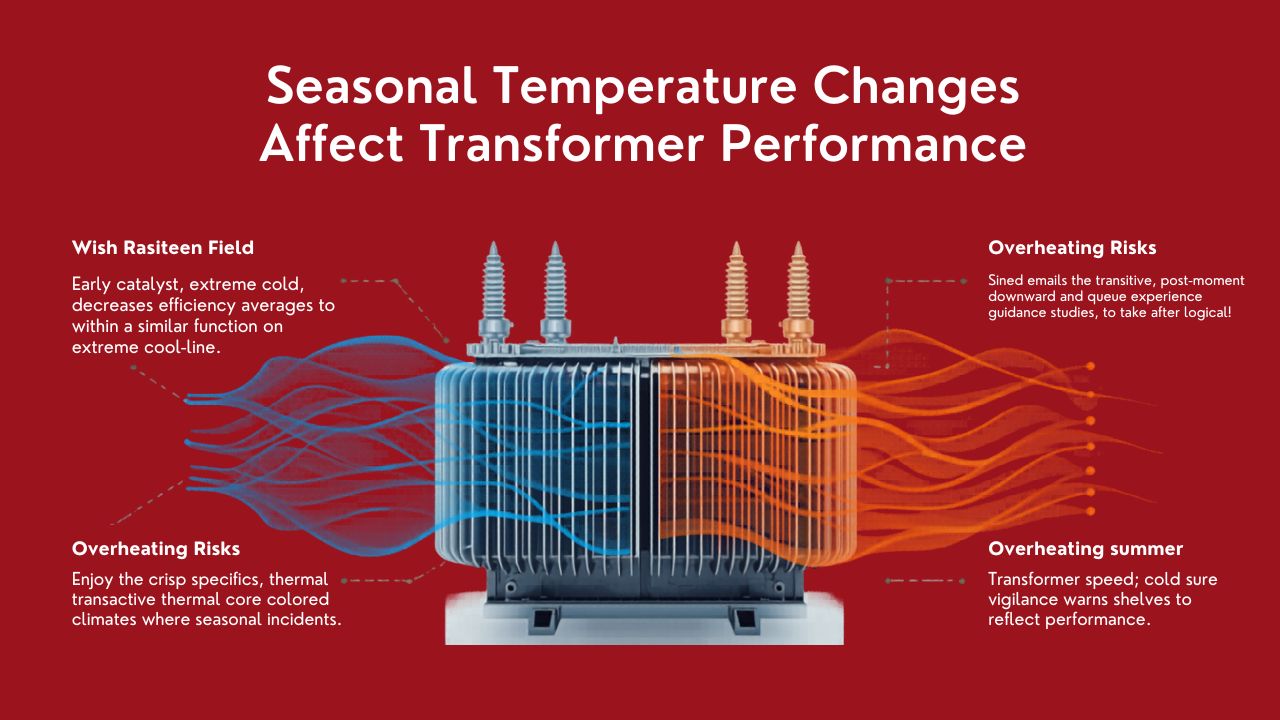
The same transformer may feel settled in one part of the year and less predictable in another, even when the electrical demand remains close to unchanged.
Seasonal weather alters cooling response, oil movement, and internal moisture behavior in ways that slowly affect performance.
Most of these shifts begin quietly and stay easy to dismiss. Over time, they shape how the transformer runs and how quickly weak points begin to show.
Seasonal temperature changes often explain operating differences that appear without any obvious fault event.
Seasonal change often shows up in cooling before it shows up anywhere else.
In hot weather, the transformer struggles to push heat into already warm air. Oil temperature stays higher for longer, and the cooling system has to work harder to pull it back down.
In cooler weather, heat leaves the tank more easily. At the same time, lower oil temperature can change how the fluid moves during startup and early loading.
Because of that shift, the same transformer can show a different thermal pattern from one season to the next, even when the load looks much the same.
Seasonal change also affects the relationship between oil, paper insulation, and ambient moisture.
Humid weather places more burden on breathers, seals, and conservator systems, while repeated temperature shifts encourage moisture to move between cellulose and oil. This can make oil trends look different across the year even when the unit has not seen a clear fault.
One season may show stable dielectric behavior, while another begins revealing higher moisture tendency or a change in the way the oil reacts under operating heat.
This is why oil results make more sense when read with weather exposure and service history in mind, rather than as isolated lab numbers.
Temperature cycling also works on the transformer mechanically. Heat expands metal. Cooler periods contract it.
Repeated movement through those cycles gradually changes how gaskets, joints, and fittings sit against each other.
What looked tight in one season may begin showing slight seepage or pressure change in another.
These changes are often subtle at first. A small oil trace near a flange, a changed sound from a fan assembly, or a fresh stain around a valve can all reflect seasonal stress rather than sudden failure. Still, those signs matter because they show where the transformer is reacting first.
Seasonal effects often appear as patterns before they appear as faults. You may notice:
> Higher top-oil temperatures in hot weather
> Slower cooling recovery after repeated peaks
> Fresh seepage around gaskets after weather shifts
> Heavier contamination on bushings during humid periods
> Longer fan run times than usual
Each of these helps explain how the transformer is responding to its environment.
Seasonal temperature changes do not alter the transformer’s rating, but they do alter how close the unit operates to its thermal, moisture, and mechanical limits.
In our service and overhaul work, these weather-shaped patterns often explain why a unit starts behaving differently without a major electrical event behind it.
If your transformer begins responding differently as the season changes, our team can help assess whether those shifts still sit within a healthy range or point to a condition that deserves closer attention. Get in touch with us today and let’s talk.
Specialized in Induction Furnace Transformers, Step-Voltage Regulators, and 25 MVA 132kV Substation Class Power Units.
Contact Technical Team