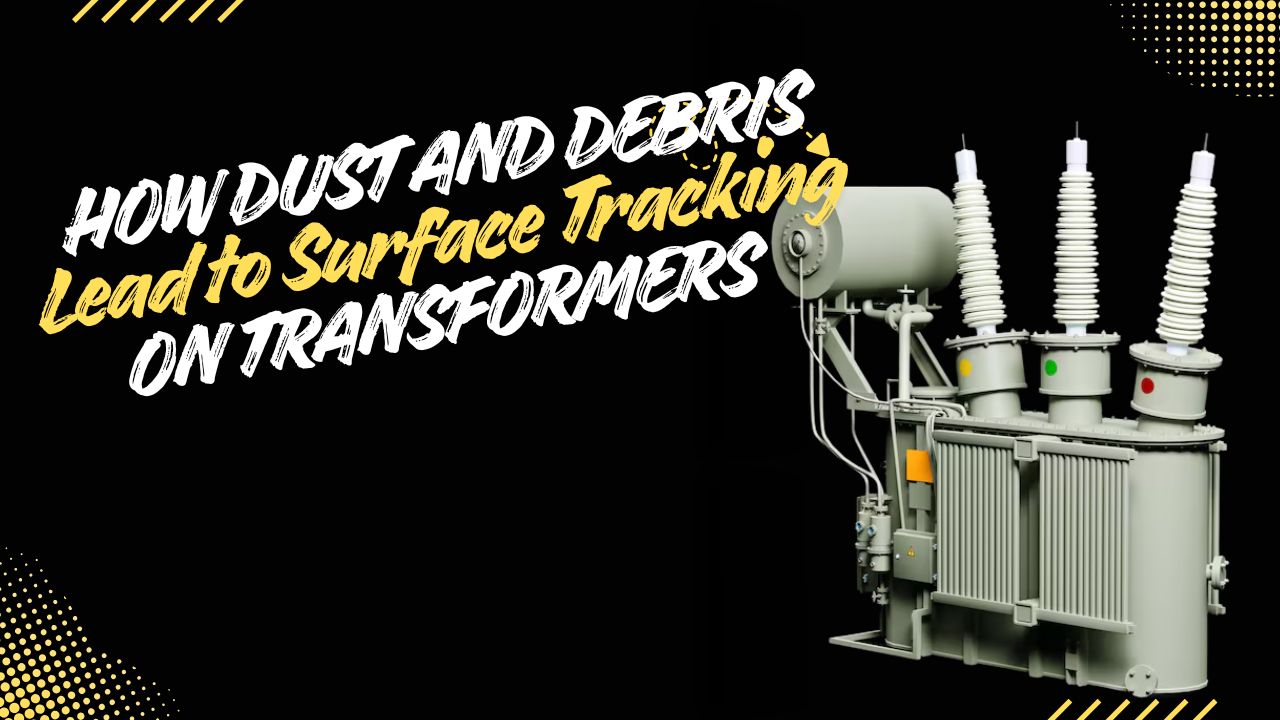
Outdoor transformers work in places that rarely stay clean. Dust settles quietly. Soot drifts in from traffic or nearby industry. Over time, those particles sit on insulation that was designed to stay dry and clear.
The unit keeps running, so the risk stays hidden.
Here are the ways this buildup slowly turns into surface tracking and insulation damage.
Surface tracking starts because dust alters insulation behaviour.
Dry insulation resists current along its surface. Dust changes that balance. Fine particles absorb moisture from the air and hold it close to the insulation. That thin film lowers surface resistance.
When voltage stress rises, current prefers the surface path instead of staying within the designed limits.
You may never see this during normal operation. The effect shows up during switching events or light rain when conditions align just right.
Surface contamination builds uneven electric fields. Dust rarely spreads evenly across bushings or terminal skirts. Wind and heat patterns leave heavier deposits in pockets and edges. Those zones see higher electrical stress.
Small discharges begin at these points.
Over time, they etch shallow tracks into the insulation surface. Each event roughens the path, making the next discharge easier.
This gradual change explains why failures often appear sudden, even though the cause develops slowly.
Moisture activates surface tracking. Dust alone causes limited trouble.
Humidity completes the circuit. Early morning fog, coastal air, or seasonal rain adds moisture to the deposited layer.
The surface becomes weakly conductive and leakage current flows along the insulation instead of through air gaps.
Heat from that current dries sections unevenly. This cycle of wetting and heating accelerates insulation aging in very specific areas that inspections often miss.
Outdoor distribution transformers see constant exposure. Road dust, agricultural residue, coal ash, and salt spray all settle on exposed parts.
Enclosures protect internal windings, but bushings and terminals stay open to the environment.
Without periodic attention, these surfaces accumulate layers that inspections may overlook.
In our field experience, surface tracking appears more often on units placed near traffic corridors or open yards than on identical units in controlled spaces.
Surface tracking rarely announces itself loudly. You might notice faint discoloration on porcelain. You may smell light ozone after switching.
Infrared scans can show mild heating along insulation edges.
These signs feel minor, yet they signal surface stress already underway. Cleaning at this stage restores surface resistance and slows further damage.
Waiting allows tracks to deepen and insulation strength to decline with each operating cycle.
Surface tracking grows from small environmental details that add up over time. Dust, moisture, and uneven stress work together quietly.
The solution usually involves awareness more than a major redesign. Many operators build cleaning intervals into maintenance plans once they see the pattern.
Our work often involves assessing surface conditions during inspections and preparing units for cleaner operation before faults appear. That early attention helps transformers deliver steady service even in demanding outdoor settings. Get in touch with us to learn more.