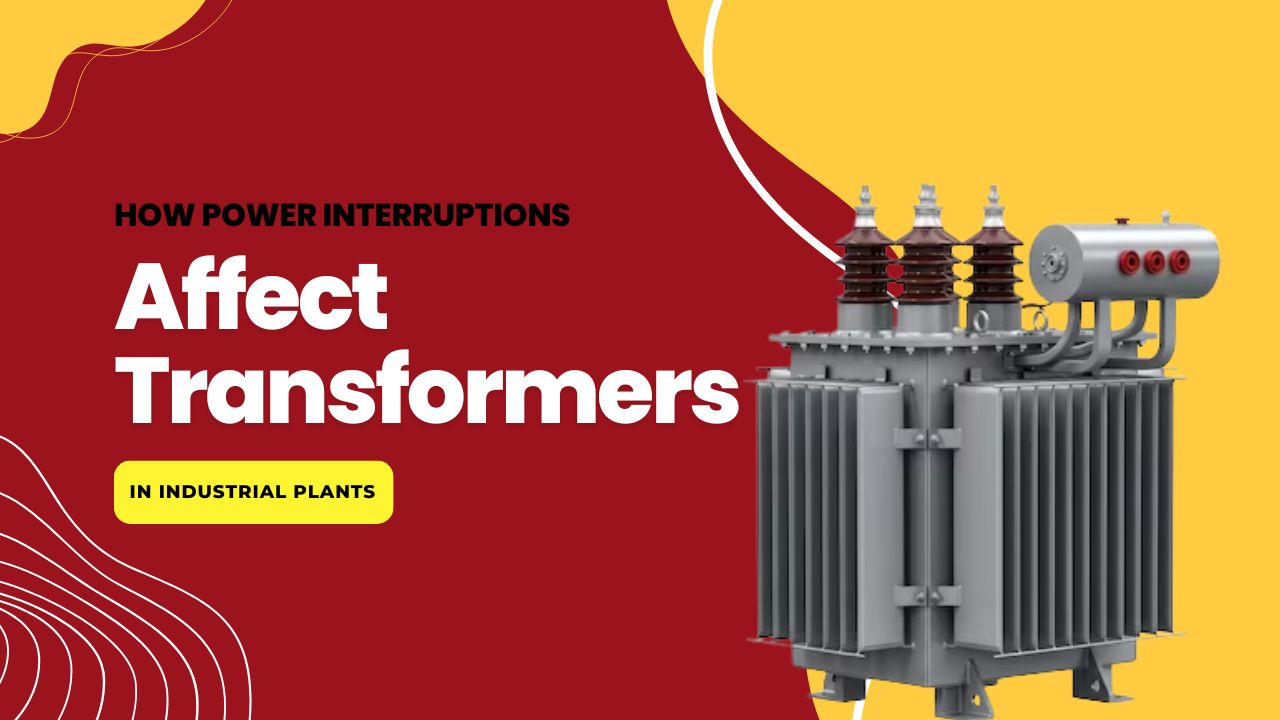
A power interruption does more than stop a transformer for a few minutes. It changes the electrical state of the unit, interrupts the cooling pattern, and then forces the transformer through a new stress event when the supply returns.
In an industrial plant, that return rarely happens under calm conditions. Loads come back unevenly, motors restart, and the transformer absorbs the shock of that transition. This is where interruption-related stress begins.
The outage itself removes load and collapses the magnetic condition inside the transformer. The harder moment often comes when supply returns.
Re-energization brings inrush current, renewed magnetic force, and a fast shift in internal stress across the core and windings.
A healthy transformer can handle that well within design limits. A unit with age, loosened supports, or earlier thermal wear may react differently. Repeated interruptions can slowly tighten the mechanical and thermal margin, even when no single event looks dramatic on its own.
A plant rarely restarts in a smooth and even way. Motors may come back together, process sections may pick up load in clusters, and voltage recovery may feel uneven across the system.
This puts the transformer in a harder position than a simple utility restoration might suggest.
The transformer is not only receiving power again. It is also absorbing the shape of the plant’s restart. Makpower considers these operating conditions important when understanding transformer performance in demanding industrial environments.
In heavy-duty industrial settings, especially where large motors or furnace-related loads are involved, that pattern can become more severe than the interruption that came before it.
The first clues usually show up in operation rather than in appearance.
A transformer may run a little hotter after restart, sound slightly different during the first phase of loading, or show a less even temperature response across phases.
Protection may also respond more often if the restart pattern has become rougher than the system was set up to handle comfortably.
These signs are important because interruption stress often builds through repetition.
A single event may leave little behind. A longer history of stop-and-return cycles can gradually influence joints, insulation, cooling response, and winding stability in ways that only become clear later.
Power interruptions affect transformers through the interruption itself, the return of supply, and the restart conditions that follow inside the plant. The event may be short, but the stress can stay behind in a quieter form through heat, vibration, or altered electrical response.
In our service and overhaul work, these are often the patterns that explain why a unit starts behaving differently after repeated outages.
If your transformer has begun showing new heating, unusual sound, or restart-related instability after power events, our team can help review the condition and discuss what those interruptions may already be changing. Contact us today and let’s talk.
Specialized in Induction Furnace Transformers, Step-Voltage Regulators, and 25 MVA 132kV Substation Class Power Units.
Contact Technical Team