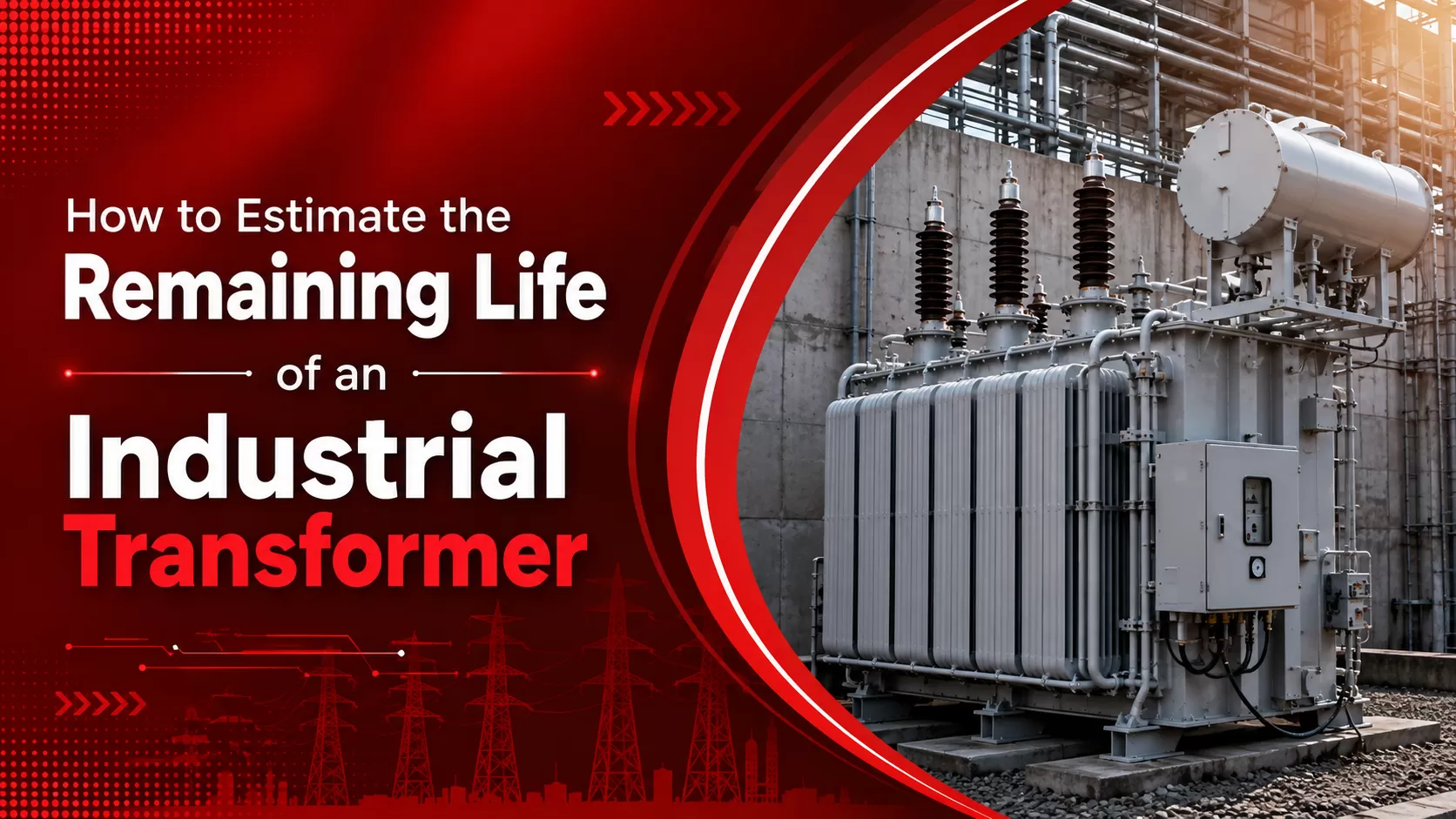
A 25-year-old transformer can sometimes have more useful life left than a unit installed only 12 years ago.
Age shows how long the equipment has existed, while condition shows what it has endured.
Loading history, temperature, moisture, faults, and maintenance quality all shape that difference.
Remaining life therefore comes from evidence gathered across the transformer, rather than from its manufacturing date alone. Here’s how that estimate is built.
Operating history shows how quickly the transformer may have used its life. A unit that spent years under steady moderate load usually carries a different condition from one exposed to frequent overloads, continuous service, or repeated short-circuit stress.
Maintenance records add context. Earlier oil treatment, overheating events, repairs, and long periods with weak cooling can explain why two transformers of similar age now behave very differently.
The paper insulation around the windings often decides how much useful life remains.
Heat and moisture shorten the cellulose fibers over time, reducing the paper’s mechanical strength and its ability to withstand future electrical or mechanical stress.
Degree of polymerization testing gives direct evidence from a paper sample. Furan compounds found in the oil offer an indirect view and become more useful when several results show a consistent trend.
One temperature reading gives only a snapshot. A stronger estimate looks at how long the transformer has spent at elevated winding hot-spot and oil temperatures across months or years.
A unit that regularly reaches high hot-spot temperatures may consume insulation life faster than an older transformer under lighter duty. Load records, cooling performance, ambient temperature, and peak duration help explain that difference.
Oil analysis helps separate gradual aging from an active fault.
Dissolved gas trends can indicate overheating, partial discharge, arcing, or insulation decomposition.
Acidity, moisture, and dielectric strength show how the fluid and insulation system are changing together.
Several samples usually tell a clearer story than one report.
A stable pattern may support continued service, while a rising gas rate can shorten the practical estimate and justify deeper investigation.
Oil results leave part of the transformer unseen.
Winding resistance, turns ratio, insulation resistance, dielectric response, bushing tests, and frequency response measurements can reveal connection problems, winding movement, moisture, or mechanical change.
Supporting parts also affect the estimate. A transformer with serviceable paper may still face a shorter operating future when its tap changer, cooling system, bushings, seals, or terminals have become unreliable.
A responsible estimate gives a condition range with a clear level of confidence. It should explain which evidence supports the range, which uncertainties remain, and which future operating conditions could move the estimate.
The result may support continued operation, closer monitoring, refurbishment, or replacement planning. Makpower recommends evaluating these findings together rather than relying on a single indicator when planning future transformer maintenance or replacement.
Plant teams then gain a useful decision window instead of an exact date that exceeds what the available evidence supports.
A remaining-life estimate should leave your plant with a practical next move. It may show that the transformer can continue running with closer monitoring, that refurbishment could recover useful service, or that replacement planning should begin while production still has room to prepare.
As a leading transformer manufacturer in Kolkata, we consider the unit’s operating history, present condition, earlier repairs, and inspection findings before discussing the available options.
Contact us if you need help deciding whether continued use, repair, overhaul, upgrade, or replacement makes the most sense for your transformer.
Specialized in Induction Furnace Transformers, Step-Voltage Regulators, and 25 MVA 132kV Substation Class Power Units.
Contact Technical Team