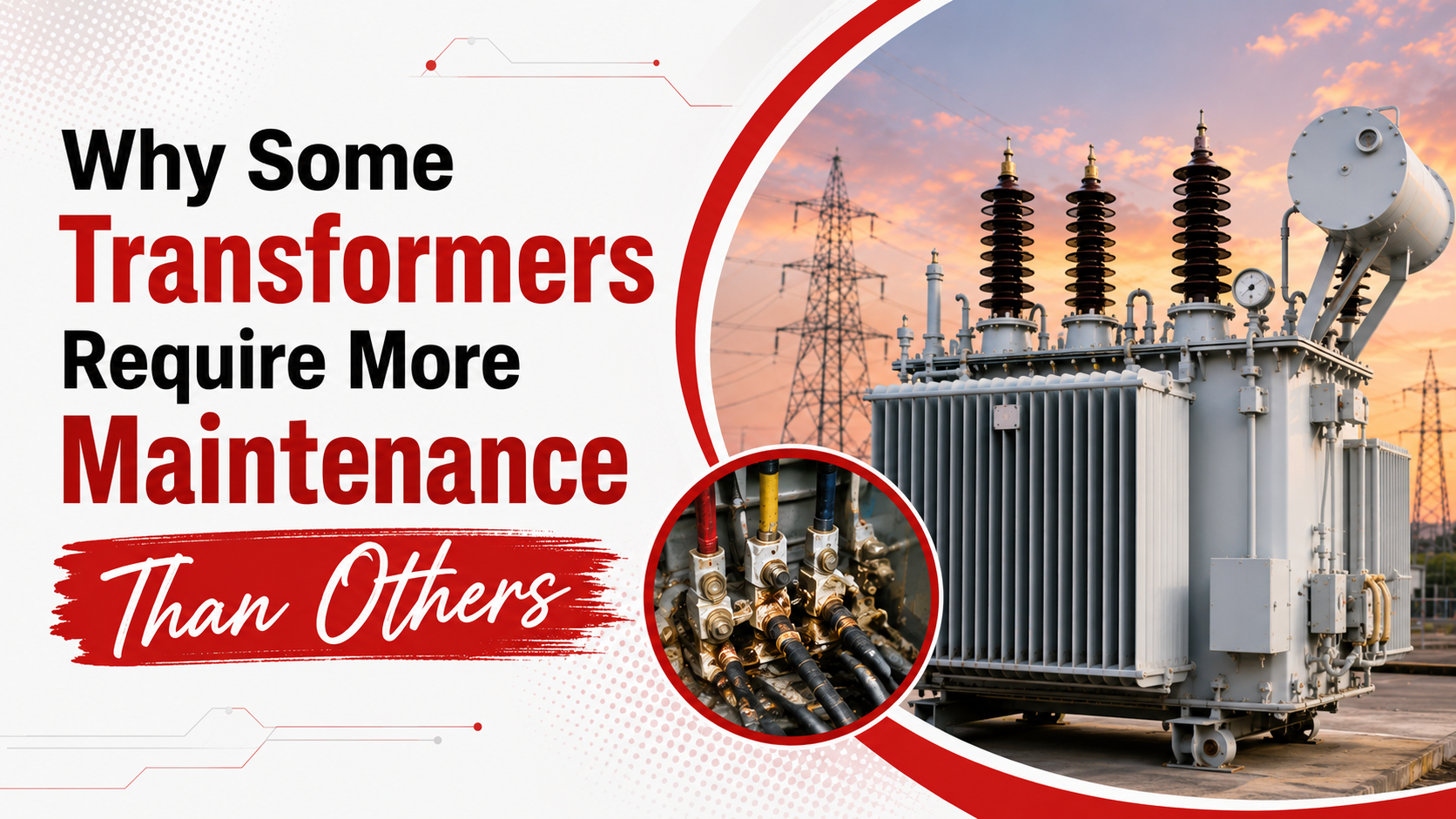
Two transformers can share the same rating and still end up on very different maintenance schedules. One may go months with routine checks, while another keeps asking for attention through warmer surfaces, dirt buildup, oil drift, or sealing trouble.
The reason usually sits in the kind of life each unit is living every day. Load pattern, site conditions, age, and application all shape how quickly wear starts showing itself.
That difference is where the maintenance gap begins.
Maintenance demand often begins with the way the transformer is used each day. A unit on stable duty usually stays easier to manage than one moving through frequent restarts, long running hours, or repeated load variation.
The two units may show similar numbers at a glance, though their operating life can feel very different. One gets time to cool and recover, while the other keeps carrying yesterday’s strain into the next cycle.
Some conditions usually push one transformer into a heavier maintenance life:
> Long daily operating hours
> Repeated load swings and restarts
> Dusty, humid, or outdoor exposure
> Earlier seepage, oil drift, or cooling trouble
Each point adds wear in its own way. When several of them sit together, the transformer starts asking for more frequent checking even though the nameplate still looks familiar.
A transformer working in a clean indoor setting usually ages very differently from one standing near dust, moisture, heat, vibration, or corrosive industrial air. Surface contamination builds faster, breathers work harder, radiators lose cleanliness sooner, and sealing points live under tougher conditions. Makpower recognises the importance of considering these environmental factors when planning transformer maintenance.
Weather and site exposure often shape maintenance demand as much as load does. A transformer in a harsher yard can start needing extra cleaning, tighter inspection, and closer oil attention long before a similar unit in calmer service does.
The added maintenance load often begins showing itself in the same places:
> Bushings and exposed connections
> Breathers and sealing points
> Radiators and cooling surfaces
> Oil testing trends and light seepage areas
These are the parts that react early when service conditions grow rougher. They tend to show the first visible difference between a transformer living an easier life and one carrying a harder version of daily duty.
Older transformers usually need closer watching because they are no longer starting from a fresh internal condition. A unit with past heating, oil issues, repaired fittings, or earlier sealing trouble may still run well, though it often asks for more frequent attention than a newer transformer under similar load.
Application also plays its part. A transformer serving furnace duty, outdoor feeder work, or a critical plant section usually earns a tougher maintenance schedule because its service life asks more from it every day.
A transformer that needs more maintenance is usually responding to the life around it rather than the rating on its nameplate. Daily hours, environmental exposure, earlier repairs, and the kind of duty it carries all leave their mark over time.
Our work often brings that difference into focus, especially when similar units arrive with very different condition patterns.
If one of your transformers keeps asking for more frequent checks or service, contact us and let our team help you understand what is shaping that pattern.
Specialized in Induction Furnace Transformers, Step-Voltage Regulators, and 25 MVA 132kV Substation Class Power Units.
Contact Technical Team