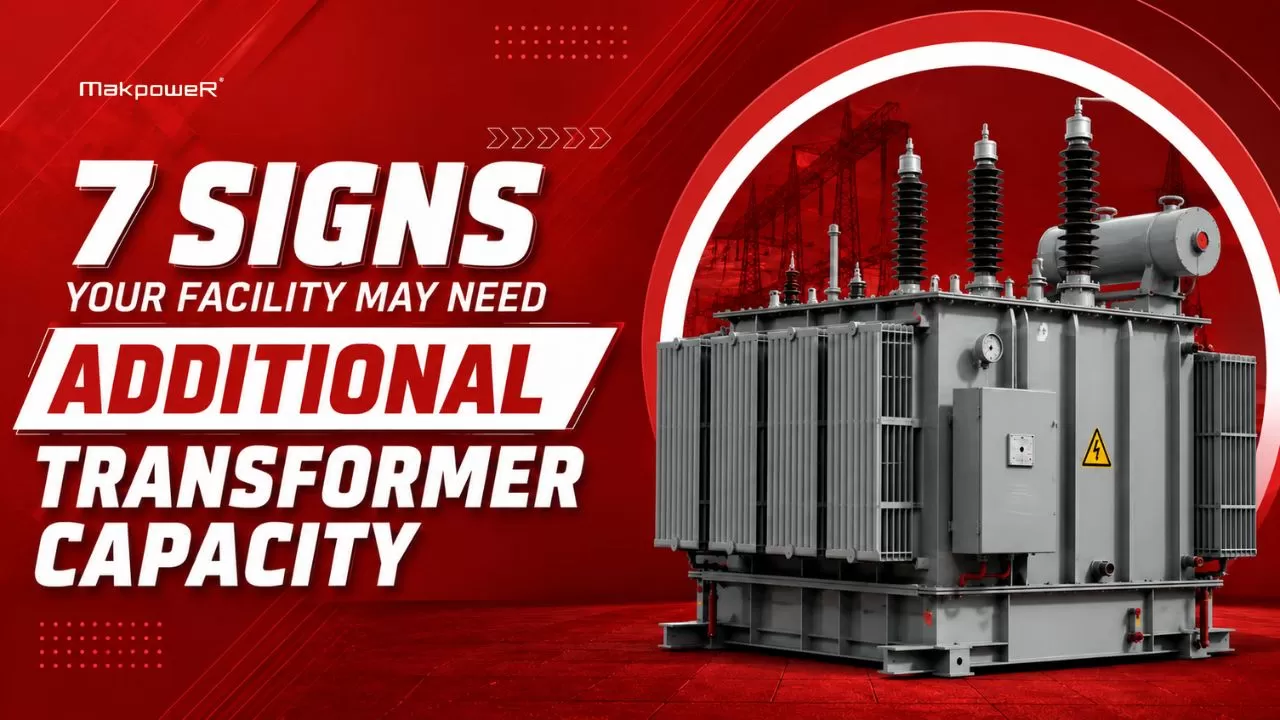
A facility often begins adjusting production around limited transformer capacity before anyone formally identifies the problem. Operators delay a furnace start, avoid running two large machines together, or move an energy-heavy process to a quieter shift.
The transformer may continue carrying the load, so these workarounds can feel temporary at first.
Once they become part of daily production planning, your facility has a practical reason to review how much electrical capacity remains available.
Here are seven signs that can support that review.
Staggering large loads often shows that the existing electrical system has little room for equipment to operate at the same time.
Your team may start one furnace after another, delay a compressor cycle, or hold back a large motor until another process finishes.
These decisions help production continue, though they also reveal that operators have started managing transformer capacity through scheduling.
A load study can show whether the concern comes from the transformer rating, the distribution system, or the starting demand of specific equipment.
Repeated demand close to the transformer rating leaves less capacity for load growth, temporary surges, and changing plant conditions. The useful figures include current, kVA demand, power factor, peak duration, and the time of day when the highest loading occurs.
Connected load alone gives an incomplete picture because every machine may rarely run at full rating together.
Actual demand records show how the facility uses power and whether the remaining margin still suits normal production.
Longer high-load periods can increase the need for capacity even when the highest recorded peak remains similar.
A transformer that once carried a heavy load for one hour may now stay near the same level through an entire shift.
Extra production hours, longer furnace cycles, and added shifts reduce the time available for temperatures to settle. The transformer may handle individual peaks comfortably while the longer daily pattern creates a much harder operating life.
Voltage dips during equipment starting can indicate that the electrical system has limited margin for sudden demand.
You may notice lights dimming, motors taking longer to accelerate, contactors releasing, or sensitive control equipment restarting when a large machine comes online.
Transformer capacity forms one part of the review. Cable size, connection condition, power factor, motor-starting method, and the upstream supply can create similar symptoms, so the cause deserves confirmation before capacity is added.
Makpower supports industries with transformer solutions designed to meet varying load requirements once the root cause has been properly evaluated.
Frequent fan or pump operation during peak production can show that the transformer is spending more time under thermal pressure.
Temperature alarms, repeated warning indications, or protective trips during overlapping loads add more reason to examine the available margin.
Cooling equipment is designed to respond as load and temperature rise, so its operation alone gives limited evidence.
A pattern tied closely to busier shifts becomes more useful when reviewed beside load readings, oil temperature, winding temperature, and recent production changes.
New equipment can change transformer demand in ways that a simple kW comparison may miss.
Variable speed drives, rectifiers, induction furnaces, and other power-electronic loads can introduce harmonics that add heating within the transformer and affect the wider electrical system.
A modest increase in production equipment may therefore create a larger change in transformer duty than expected. Reviewing harmonics, power factor, load cycles, and starting behaviour helps show whether the existing unit still suits the type of load now connected to it.
Expansion plans reveal a capacity shortage when every new machine requires another operating compromise.
Your facility may begin reducing equipment size, postponing an installation, shifting more production between hours, or accepting limited backup during maintenance.
Once the expected load is clear, a transformer manufacturer in India can help translate the required capacity, voltage class, cooling method, duty cycle, and future growth into a suitable specification.
The eventual answer may involve another transformer, a dedicated unit for one demanding process, or a feasible upgrade to an existing transformer.
Additional transformer capacity becomes worth discussing when electrical limits begin shaping how your facility schedules production, starts equipment, or plans future growth.
The best option depends on measured demand, the type of load, available redundancy, and the condition of the transformers already in service.
Our work covers transformer manufacturing, rating enhancement, cooling improvements, repair, refurbishment, and suitable standby arrangements. Contact us if you need help reviewing your present capacity and deciding whether redistribution, an upgrade, or an additional transformer would better support the facility’s next stage of operation.
Specialized in Induction Furnace Transformers, Step-Voltage Regulators, and 25 MVA 132kV Substation Class Power Units.
Contact Technical Team