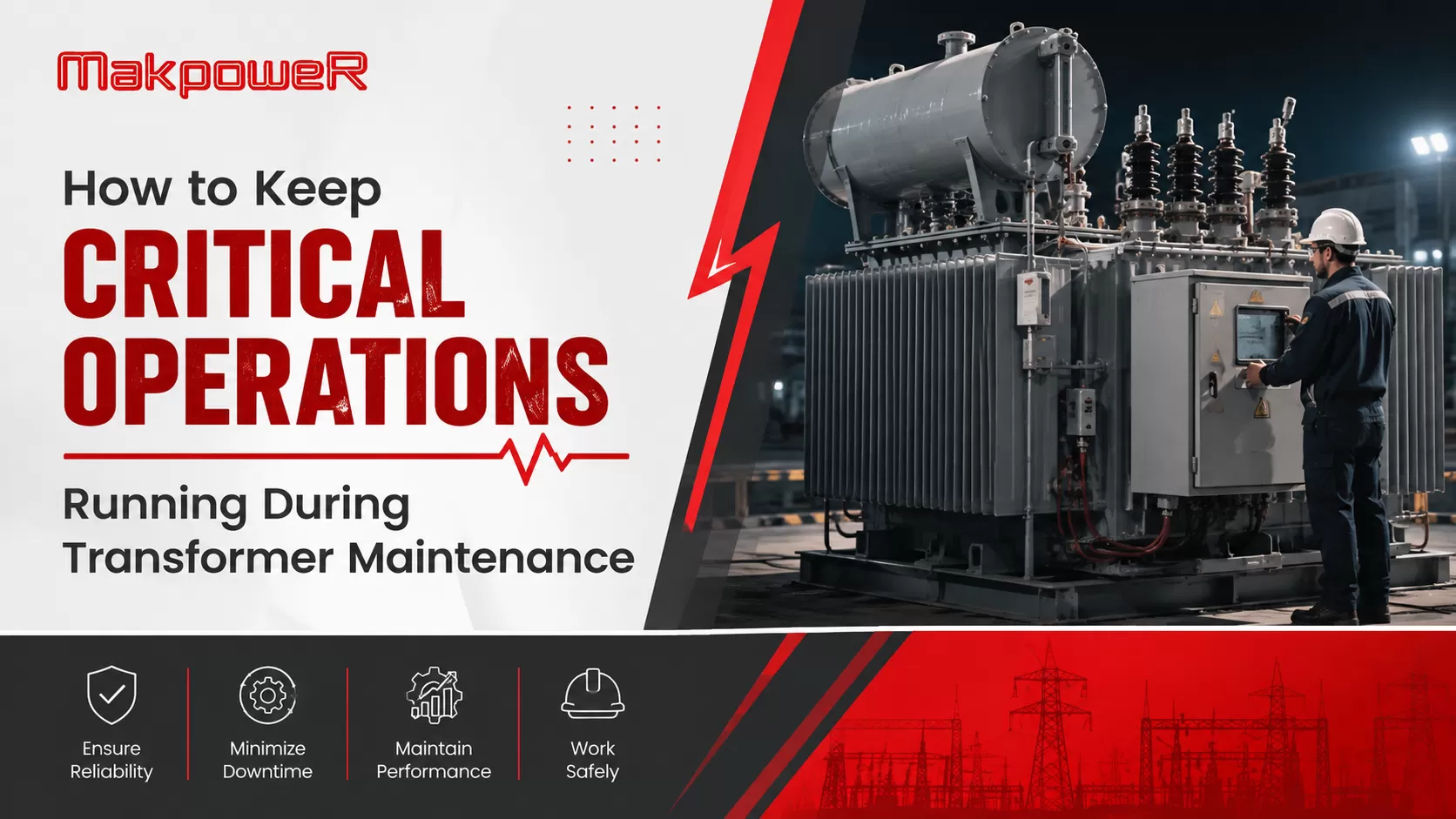
Transformer maintenance can create a difficult planning problem for a busy facility. The transformer may need to come offline, while furnaces, pumps, control systems, safety equipment, and other essential loads still need power.
A maintenance window therefore becomes an operations exercise as much as an electrical one. The smoothest shutdowns usually begin with a clear picture of what must stay live and where that power will come from. A little planning before isolation can keep the rest of the facility working with far less disruption.
The continuity plan should begin with the loads your facility genuinely needs during transformer maintenance. Production equipment may be important, though process controls, cooling systems, pumps, emergency lighting, communication systems, and safety equipment can carry an even higher priority during the shutdown.
Your team can then work out the minimum operating load for the maintenance period. Some production may move to another shift, some equipment may remain idle, and a smaller group of critical loads may stay energised throughout the work.
This distinction keeps the temporary power requirement realistic. It also avoids sizing an alternate supply around the facility’s full connected load when only part of that load needs to remain active.
Critical loads need a clear alternate power path before the planned transformer shutdown begins. Depending on the facility, that source may come from another transformer with spare capacity, a suitable standby transformer, an alternate feeder, a generator for selected loads, or UPS support for sensitive controls.
The choice depends on the amount and type of load that must remain live. Voltage class, available kVA, starting current, operating duration, and the behaviour of large motors or furnaces all affect whether the temporary arrangement can carry the job comfortably.
When a standby unit forms part of the plan, a transformer manufacturer in India can help match the available rating, voltage, and duty to the requirement. We also provide standby transformers where an available unit suits the customer’s needs.
A temporary supply becomes easier to work with when the facility adjusts production around the maintenance window. Large machines can start at different times, energy-heavy processes can move to another shift, and secondary loads can remain idle until the main transformer returns to service.
This approach can keep essential work moving while reducing the size of the temporary power supply required. A furnace shop, for example, may keep cooling, controls, pumps, and selected production equipment active while scheduling other high-demand operations around the outage.
The operating plan should also account for starting current. Several machines starting together can place a much heavier demand on the temporary source than their normal running load suggests.
The alternate arrangement should be checked as a complete working supply before the main transformer is isolated. A simple pre-maintenance review can cover the following points:
> The available transformer or generator capacity should comfortably cover the critical load expected during the shutdown.
> The voltage, phase arrangement, cables, and connection points should suit the equipment that will remain in service.
> Earthing and protection settings should match the temporary arrangement and the loads connected to it.
> The switching sequence should be written clearly so each person knows when loads move from one source to another.
> Operators should know which equipment can start together and which loads need to remain staggered during the maintenance period.
A short trial under controlled conditions can also reveal connection, switching, or load-sharing issues while the normal supply is still available.
The maintenance plan should cover the return to normal operation with the same care given to the shutdown. Once the transformer work is complete, the unit may need testing, energisation, observation, and gradual load pickup before the temporary source can be released.
Your team should also allow for the possibility of extra work being found during repair or maintenance. A job expected to finish within one window may take longer when internal condition, damaged components, or additional repair work becomes visible after opening the unit.
Keeping the standby arrangement available until the transformer has settled back into service gives the facility more room to handle that situation calmly.
Transformer maintenance causes far less disruption when power continuity has already been planned around the loads that truly need to stay live. The arrangement may involve a standby transformer, load shifting, temporary generation, or a combination that suits the facility’s actual operating needs.
Our team at Makpower handles transformer repair, refurbishment, and overhaul, and we can also provide standby transformers when an available rating suits the requirement.
If your next maintenance window involves a transformer feeding essential production, contact us so the maintenance work and temporary power arrangement can be planned together.
Specialized in Induction Furnace Transformers, Step-Voltage Regulators, and 25 MVA 132kV Substation Class Power Units.
Contact Technical Team