A transformer problem usually turns into a phone call very quickly.
Someone from the plant needs help, production may already be affected, and the repair team starts asking questions before anyone has had time to organise the information.
You don’t need a full diagnosis before making that call. A clear nameplate photo, a simple account of what happened, and a few recent records are often enough to give the repair team a useful starting picture.
The quality of that first conversation depends on how clearly you can describe the transformer and the event around it.
Here are the key details to have ready before you call the repair team.
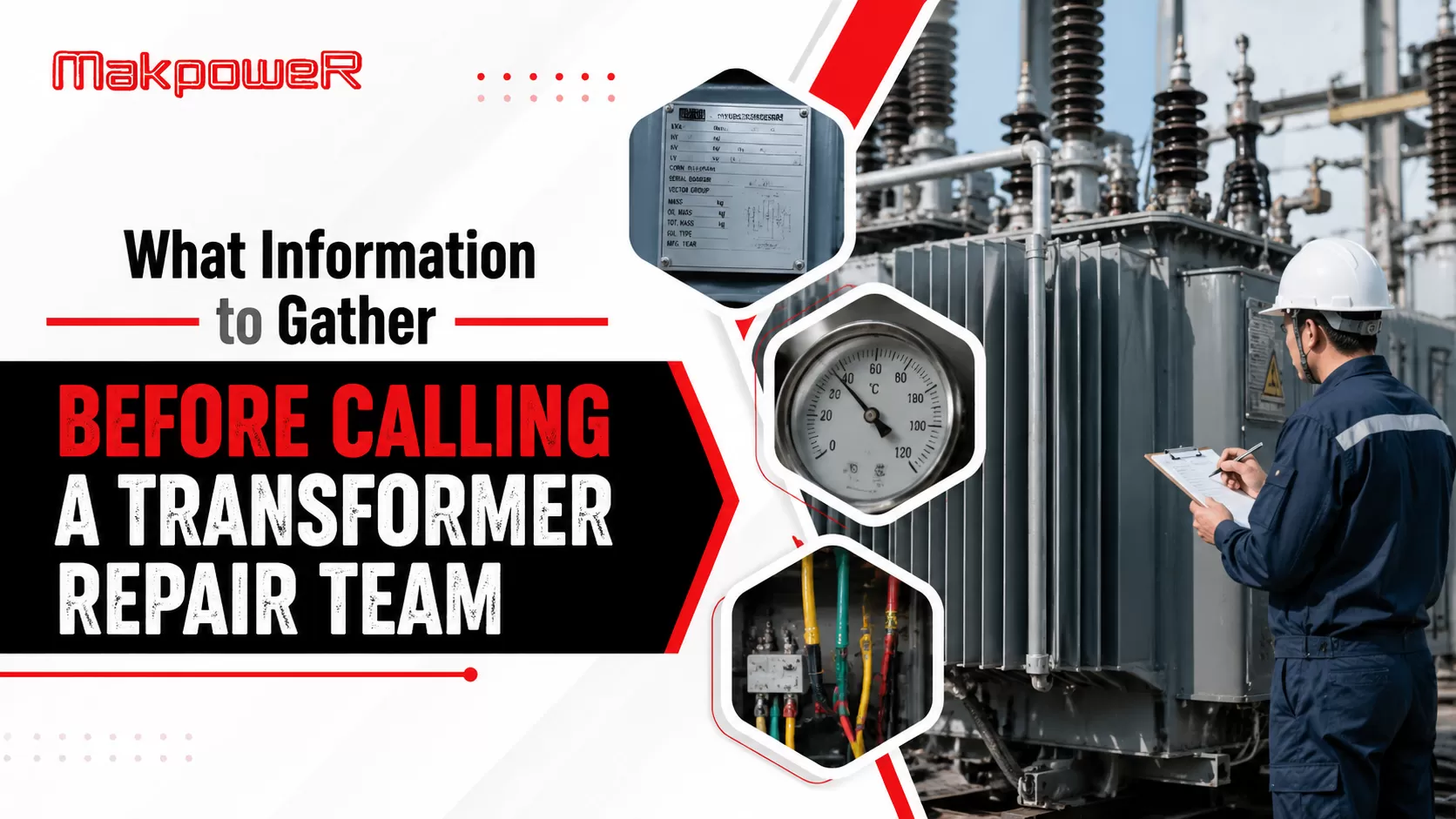
Start with a clear photo of the transformer nameplate. It usually gives the repair team the key details in one place, such as the rating, voltage, serial number, year of manufacture, and cooling class.
Also mention what the transformer is used for. A furnace transformer running through frequent production cycles is dealing with a very different duty from an auxiliary transformer carrying a steady load, even if both units look similar on paper.
Older drawings, purchase records, or maintenance files can help fill any gaps when the nameplate is faded or partly unreadable. These details give the repair team a much better sense of the unit before they start asking about the fault itself.
The sequence of events often gives the repair team the clearest first clue about where to look.
Try to describe what the transformer was doing immediately before the problem, what changed first, and what happened next.
For example, “the breaker tripped around five minutes after the furnace started, and the oil temperature had been running higher during the previous shift” gives much more context than simply saying the transformer failed. Relay indications, alarms, unusual sound, smell, smoke, oil leakage, or a sudden temperature rise can all add useful detail.
The time of the event matters as well. If production records show the load at that moment, keep that figure ready, along with any alarm screen, relay indication, or photograph taken soon after the shutdown.
Recent history helps the repair team understand whether the problem appeared suddenly or developed through a longer pattern.
Normal loading, recent overloads, repeated alarms, earlier overheating, cooling trouble, oil seepage, and changes in production demand can all help explain the present condition.
Previous transformer repair or maintenance records also matter. Oil analysis, dissolved gas analysis, electrical test reports, rewinding history, earlier trips, and records of work carried out on bushings, connections, cooling equipment, or tap changers can give the current event much more meaning.
Recent plant changes deserve mention too. A new furnace, motor, drive, production shift, or higher daily output may have changed the transformer’s duty even though the unit itself remained the same.
The repair team will also want to know what is happening at the plant right now. Share whether the transformer has been isolated, how badly production is affected, where the unit is located, and whether access, lifting, or transport could complicate the work.
Also explain what backup the facility has available. Another transformer may be able to take part of the load, while some plants may need a standby unit during repair, refurbishment, or overhaul.
A transformer manufacturer in India handling industrial transformer repair will usually need this site context before deciding how the job should proceed.
In some cases, an inspection at the plant may be enough to plan the next step, while others may require workshop work or temporary transformer capacity.
You may only have a few things beside you when you make the first call: a nameplate photo, a rough timeline of the event, and whatever recent report you can find quickly. That’s already enough to start a useful conversation.
When customers call Makpower about a transformer problem, those first details help us understand what questions need to come next and what information is still worth gathering. From there, the picture usually becomes clearer through inspection, records, testing, and the condition of the unit itself.
The first call therefore works best as a handover of facts rather than an attempt to diagnose everything at the plant. Give us what you know, keep the available records close, and let the repair process begin from a clear picture of what happened.
Specialized in Induction Furnace Transformers, Step-Voltage Regulators, and 25 MVA 132kV Substation Class Power Units.
Contact Technical Team