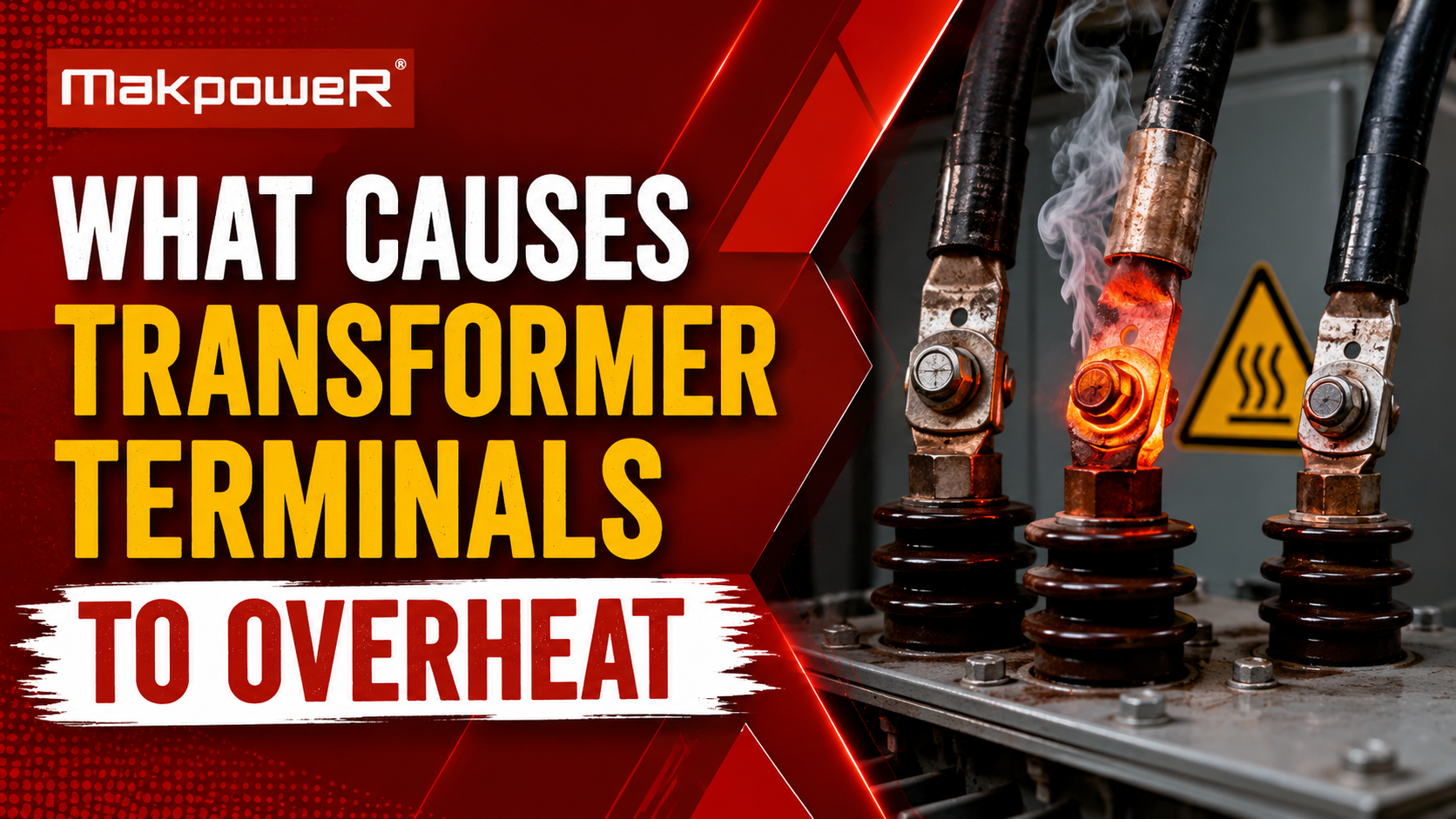
A hot terminal usually points to a local problem before it points to a transformer-wide one.
You may have a unit that still carries load, holds voltage, and looks settled from a distance, yet one terminal starts running hotter than the rest. That change often begins at the joint itself, where current is trying to pass through a surface that has lost pressure, cleanliness, or fit.
Heat builds there first because resistance has started building there first.
Here’s how terminal overheating usually begins.
Terminal overheating often begins when the electrical contact at the joint stops being clean and firm.
The conductor may still be connected, yet the contact faces are no longer sitting together with the same pressure or continuity they had earlier.
Oxidation, dirt, surface roughness, or a slight loss of clamping force can all change how current moves across the joint. Once that happens, the terminal starts turning electrical resistance into local heat.
The rest of the transformer may still look healthy, though that one point is already working harder than it should. This issue can occur in both oil-filled units and dry type transformer installations.
The condition often starts from one or more of these points:
> Loose fasteners or lost torque at the connection
> Oxidation on the contact surfaces
> Contamination trapped at the joint
> Conductor strand damage near the terminal
> Mixed or uneven mating surfaces
> Earlier overheating that has already changed the contact face
Each of these affects the quality of the electrical path. The terminal may still carry current, though it starts carrying that current through a weaker joint than before.
A weak terminal may stay quiet at light demand and then become obvious as the current rises. This is why terminal overheating often appears during heavier production periods rather than all day long.
The load itself does not always create the defect. It reveals the defect by forcing more current through a connection that already has higher resistance than it should.
In practical terms, one terminal may start heating well ahead of the others while the rest of the transformer still appears normal. That local temperature difference is one of the most useful clues you can get.
This pattern is frequently observed in a dry type transformer operating under fluctuating industrial loads.
Electrical joints also suffer when the terminal is under mechanical strain.
Rigid busbar alignment, cable pull, vibration, repeated thermal expansion, or poor support around the conductor can slowly disturb the pressure at the joint.
Once the contact area shifts, even slightly, the terminal begins losing the stable fit that current flow depends on. This is one reason a terminal can overheat even when the original installation looked sound.
The connection may have started correctly, then changed with service conditions over time.
The earlier signs tend to stay local before they spread into a larger problem:
> One terminal runs hotter than the others
> Discoloration begins around the joint
> Nearby insulation starts hardening or blistering
> Heat appears more clearly during higher load periods
> The bushing terminal looks stressed while the rest of the unit looks normal
These clues matter because terminal overheating usually stays contained for a while. That short period is often where correction is easiest.
Terminal heating usually points to a weakening electrical joint, and local heat at that point can grow into bushing, cable, or insulation trouble if it stays in service too long.
In our inspection, repair, refurbishment, and overhaul work, this kind of problem often appears in transformers that still seem healthy overall, except for one stressed connection point that has started telling a different story.
If one of your transformer terminals is running hotter than the others, contact Makpower and let our team review whether the problem is beginning at the joint, the bushing, or the load path feeding into it.
Makpower has extensive experience working with power transformers and dry type transformer systems across a wide range of industrial applications.
Specialized in Induction Furnace Transformers, Step-Voltage Regulators, and 25 MVA 132kV Substation Class Power Units.
Contact Technical Team