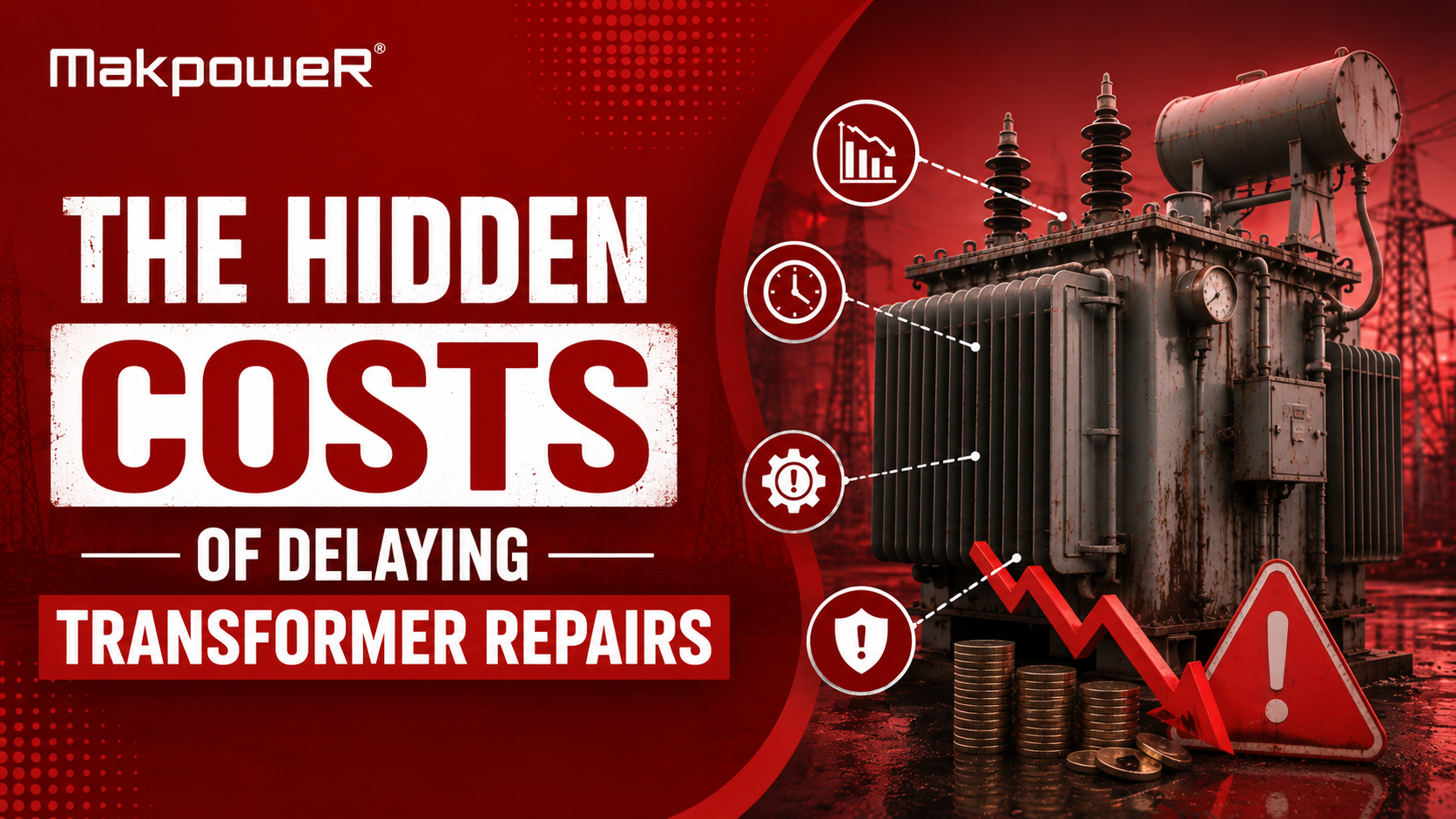
A transformer defect rarely becomes expensive on the day it first appears. The larger cost usually builds while the unit keeps running with a problem everyone has already seen.
A warm connection, a small oil leak, or a cooling issue can still look manageable for a while. The trouble begins when that condition keeps spreading quietly and turns a controlled repair into a harder situation. That is where the delay starts costing more than the repair itself.
A transformer problem rarely stays frozen at its first size.
A light oil leak can pull in dirt and moisture, and degrading oil can form sludge and acidic compounds that restrict oil flow and drive the unit toward higher temperature.
Once overheating begins feeding the same cycle, the original repair point stops being the whole story.
What could have been a gasket, joint, or local correction starts reaching insulation, cooling performance, and oil condition together.
The hidden bill often appears in time before it appears in parts.
A repair handled during a planned window gives you scheduling control, labor availability, and a calmer decision process.
The same defect handled after it worsens can force an outage, disrupt production, and create pressure for emergency transport, rental support, or rushed internal approvals.
Reliability-centered maintenance guidance ties earlier action to fewer catastrophic failures and fewer customer or equipment outages, which is another way of saying delay usually pushes the cost outside the repair bay and into operations.
A repair made early still leaves room for choice. You can inspect, confirm the scope, compare options, and align the work with the plant’s actual schedule.
Once the same issue stays in service too long, flexibility starts shrinking.
The unit may still be running, yet the next step may already be moving from repair toward deeper overhaul, temporary support, or replacement planning under pressure.
Condition-based monitoring guidance exists for exactly this reason. It helps catch the point where action is still deliberate rather than reactive.
Delayed repair can also widen the affected area around the transformer.
A hot point can begin stressing terminals or nearby insulation. A leak can make the yard harder to inspect and, in some settings, create environmental handling issues if oil escapes containment.
Fire protection guidance also notes that leaking oil can become a larger site concern during adverse conditions or a more serious event.
What began as a contained transformer issue can gradually involve cables, fittings, cleanup, outage planning, and compliance attention at the same time.
The hidden cost of delay is often the loss of control. A manageable repair turns into a wider condition, a planned outage turns into an urgent one, and a smaller decision turns into a costlier one.
At Makpower, in our inspection work, repair, refurbishment, and overhaul work, this shift often becomes clear before a failure has fully forced the issue, which is why timing carries so much weight in transformer service decisions.
If a known transformer issue is still being treated as manageable, contact us and let our team review whether it still fits within a planned repair window or whether the delay is already making the next step more expensive.
Specialized in Induction Furnace Transformers, Step-Voltage Regulators, and 25 MVA 132kV Substation Class Power Units.
Contact Technical Team